| |||||
|


| Reservations |
|
|
Nudes and Nudity: Quotationsa pretty girl who is naked / is worth a million statues - e. e. cummings And who is so barbarous as not to understand that the foot of a man is nobler than his shoe, and his skin nobler than that of the sheep with which he is clothed. - Michelangelo Men's magazines often feature pictures of naked ladies. Women's magazines also often feature pictures of naked ladies. . . . the male body is hairy and lumpy and should not be seen by the light of day. - Richard Roeper My concern has always been to paint nudes as if they were some splendid fruit. - Pierre-Auguste Renoir The nakedness of woman is the work of God. - William Blake When I began to photograph nudes, I let myself be guided by this camera, . . . and the lens produced anatomical images and shapes which my eyes had never observed. - Bill Brandt, photographer When you draw a nude, . . . make certain that all the parts hang together. - Leonardo da Vinci Woman's nudity is wiser than the philosopher's teachings. - Max Ernst You miss a lot of wonderful as well as historic art if the nude is denounced. - B. J. Adams
Paintings of NudesFelicious faces and naked women are interesting to most people. Much comes from how the human mind is set to work, also instinctively. Paintings of naked women can make long-lasting impressions. There may be combinations of naked persons and scenery, bodily contortions or postures, maybe drapery, apart from the painter's ways of drawing, or style, and so on. Paintings are not always naturalistic likenesses. Some paintings are fanciful, surprisingly dissimilar, and seem to take off from their objects, if any at all. Looks are different too - from rigged portrait looks to lively ones where the artists seemingly has captured a moment long before photography came around. Also, some paintings are made by "professionals", and others are by amateurs. We may start as amateurs. Some amateurs have become famous artists and at least one famous artist, Picasso, strove for a life-time to paint like children, according to himself, that is. Over and above the series of "rules" or half-rules about painting in different periods one finds that different paintings makes different statements, or impressions on us. Artistic statements may be what impress spectators for a long time apart from delightful colours, colour balances, the play of bright and dark areas, of lighted and shadowed areas, so-called rules of composition and also many kinds of breaks with those rules. Some great works and their 'statements' stay with us across periods, like Mona Lisa by Leonardo da Vinci. The abstract above could need a rich array of artist works focused on nude women to fill in. The Internet has good screen-reproductions some of them. What is transmitted may not include texture in all its aspects, but anyway . . . Tip: If you go for art in some way, do it or go for what is "as classy as you can". Formerly, painters studied renowned paintings they had access to first, learnt "a few tricks of the trade" before they came up with their own famous paintings. Besides, paintings are investment objects and subjected to speculation too, in time. There are paintings of nudes, portraits and favourite artists to browse through, and articles with reproductions on many of them, and cavalcades of paintings and photos on Wikimedia Commons, where you can search as you will. There are how-to-do-it books on such as drawing and painting, and art books about the history of art; art periods like the baroque; and many, many art books on famous artists with reproductions of some of their most notable artwords: Bouguereau, Matisse, Picasso, Rembrandt, Renoir and Rubens and lots of others. - Pierre Bonnard, Gustave Courbet, Jean-Auguste-Dominique Ingres, Francois Boucher, Alessandro di Christofano di Lorenzo Allori, Fernando Botero, Antonio Correggio are also among the painters of nudes.
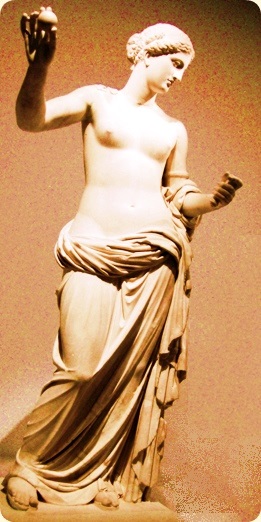
Sculptures of WomenSculptures of women may quickly remind us that "the real thing" is better, and not "a frozen form" only, but "is what it is" plainly. Sculpture is one of the plastic arts. Carving and modelling in stone, metal, ceramics, wood and other materials have been key methods, but vast freedom of materials and process arrived with modernism. Materials may be worked by removal (carving), assembled (by welding or modelling), or molded, or cast. Most ancient sculptures were brightly painted. Many women are too. A statue may be formed to represent something, by people, animals or something else. A small statue is called a statuette or figurine. Venus of Milo, whether the statue is of Aphrodite or someone else, is a famous example. |
|
Getz-Preziosi, Pat. 1994. Early Cycladic Sculpture: An Introduction. Rev, ed. Malibu, CA: The J. Paul Getty Museum. Jacobus, John. 1983. Henri Matisse. New York: Harry N. Abrams.
Sluijter, Erik Jan. 2006. Rembrandt and the Female Nude. Amsterdam, NL: Amsterdam University Press.
|
 |
Section | Set |  |
 |
User's Guide ᴥ Disclaimer © 2003–2019, Tormod Kinnes, MPhil [Email] |